
Featured Cars · A documented example
TUK 129F: a 1967 Series 1 4.2 2+2
A home market 2+2 in Golden Sand over red, still carrying the engine, gearbox and rear axle it left the works with. Its history is unusually complete, and unusually honest about the years when it was nearly lost.
Everything on this page comes from the car's present owner, Stephen Ruddick, who wrote its history and supplied the photographs. Like the page on 9769 HA, it is an exception to the archive's usual rule of working from published sources, and it is set out here as he gave it.
What left the works
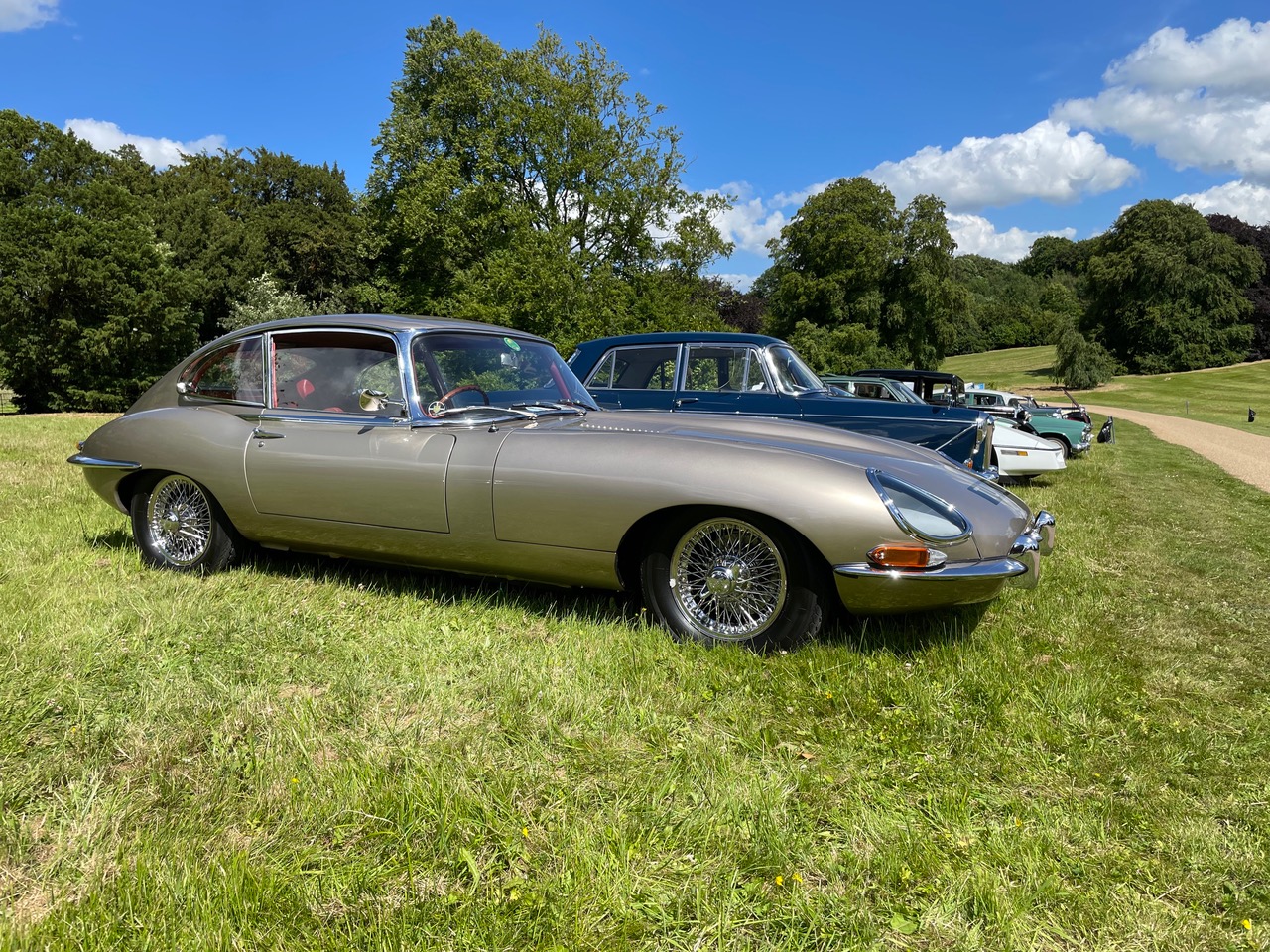
TUK 129F is a Series 1 4.2-litre 2+2, built in May 1967 and finished in Golden Sand with a red interior. It is a home market right-hand-drive car, of which comparatively few were made, and it still wears its original colour combination. It also still has the engine, the transmission and the rear axle it was built with, which after nearly sixty years and six owners is the part of its record most worth stating plainly.
It was distributed by Charles Attwood of Wolverhampton.
The year it did not sell
Here the car does something unusual, and it is the reason it is worth a page rather than a paragraph.
Although it was built in May 1967, TUK 129F did not find a buyer. The original log book records its first registration at the end of June 1968, more than a year later, and not long before the Series 2 cars were announced. Why a new E-Type sat unsold through 1967 and into 1968 is not recorded anywhere in the car's papers, and Stephen's own view is that it is a mystery that will stay one.
The consequence is a car whose registration and whose specification disagree. An F suffix places the registration between August 1967 and July 1968, which is squarely the period of the interim cars that collectors call Series 1.5. The car itself is nothing of the kind. It was built before the changes of August 1967 and it carries its glass headlight covers, three carburettors and earlier specification accordingly.
This archive argues on its Series 1.5 page that a seller describing a car by its headlights is describing the least reliable feature on it. TUK 129F is the same argument from the other direction: a car described by its registration year would be described wrongly. The build date and the chassis number are what settle it, and on this car they are thirteen months apart from the number plate.
Six owners, and the years it nearly did not survive
The first owner was an engineering company in Wolverhampton, the same town as the distributor. The car was later transferred to a director of that company, who in effect became its second owner and kept it for a further twelve years.
By the end of that period the car had deteriorated badly. The next owner to see it described it as one step away from the scrap yard, and the photograph taken at the time supports the description without needing any help: corrosion through the front wing, the sill and the area around the headlight, and paint lifting along the length of the car.
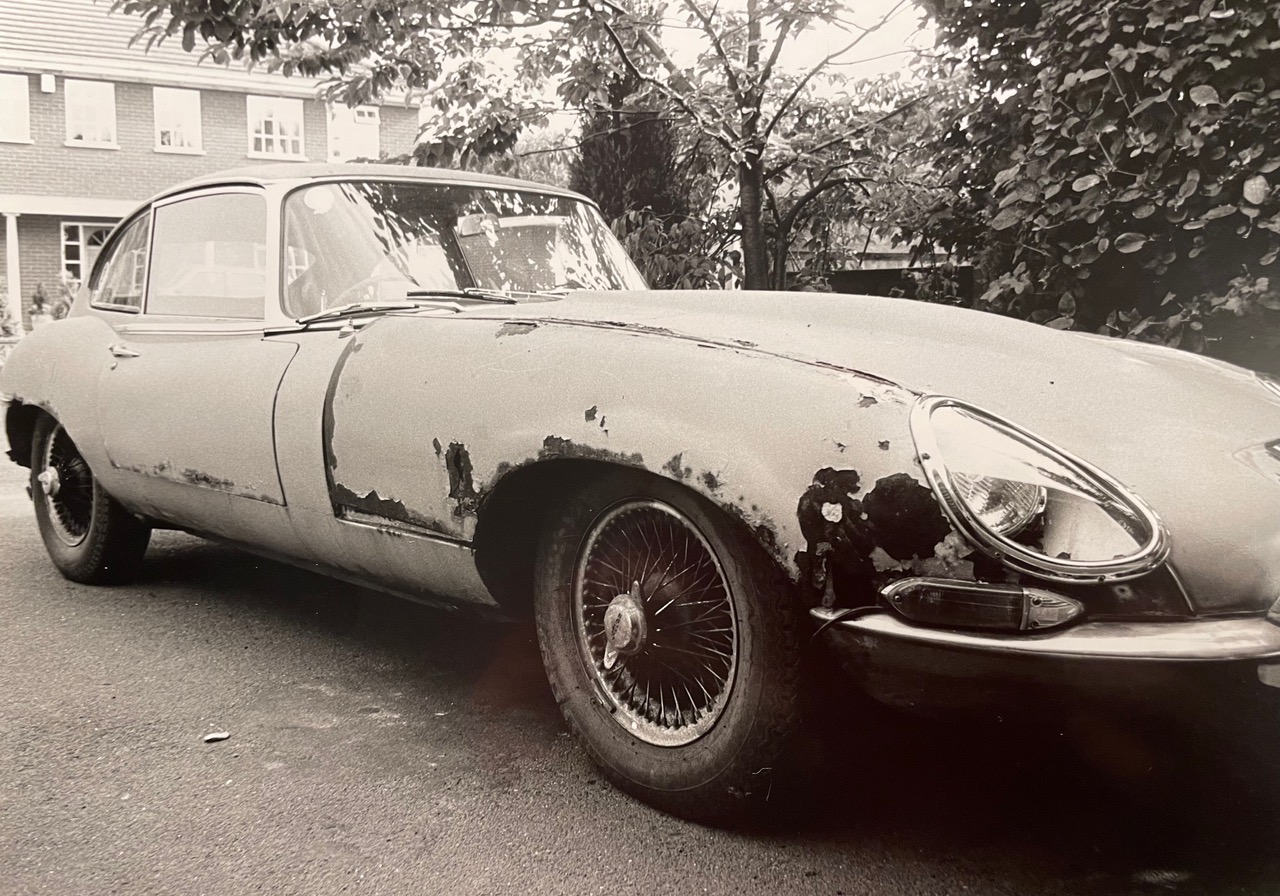
That third owner took it on regardless. The restoration ran from 1984 and took six years to complete, after which he kept and used the car until circumstances forced a sale in 2008.
The owner who followed spent a considerable sum over the next eight years, including at least one door and the entire bonnet assembly. No invoices survive for any of it. Stephen's own explanation is the one most E-Type owners will recognise: there were probably so many of them that they became an embarrassment and were destroyed.
The car changed hands twice more, in 2016 and again in 2017, most likely because problems were becoming evident in a number of areas.
What Stephen found
Stephen bought TUK 129F in July 2019. The dealer's workshop inspection sheet at the time listed no fewer than twenty-six items requiring attention.
His local Jaguar specialist has worked steadily through that list, and through more that emerged behind it, to bring the car back to a condition in which it can be used and enjoyed rather than merely owned. It is now a regular sight at shows and on the road in North Yorkshire, which is where this archive came across it.
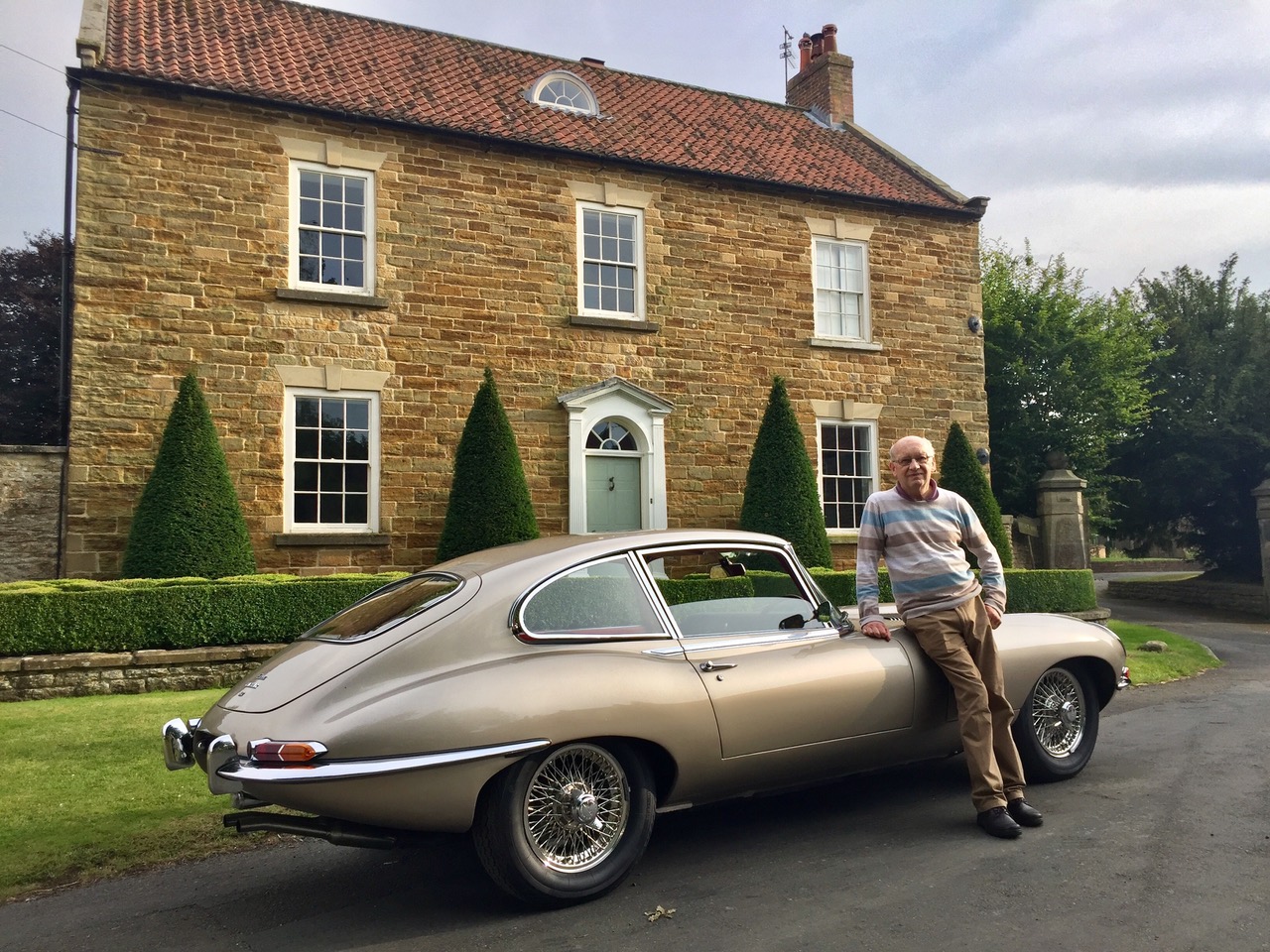
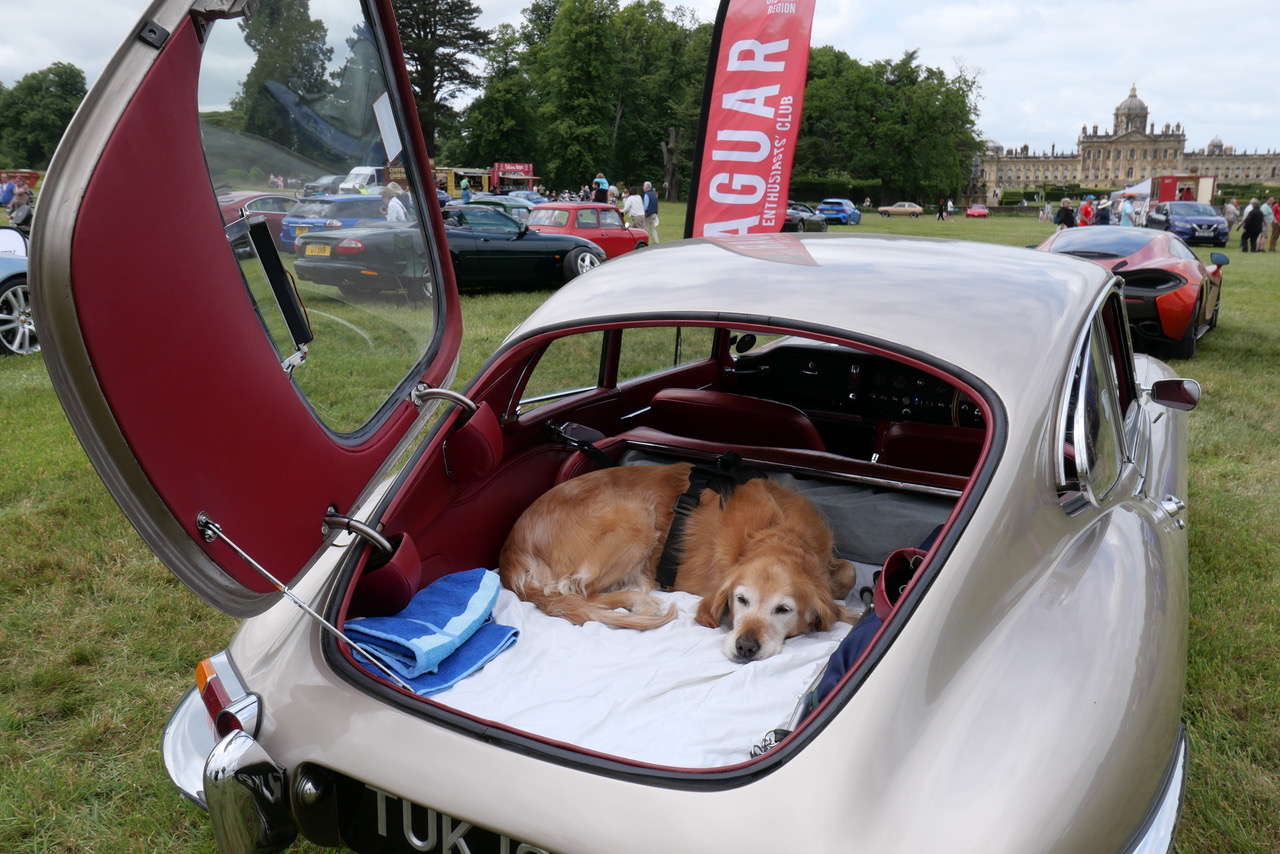
Stephen continues to use the car rather than keep it only for display. It is a regular sight at Jaguar Enthusiasts Club shows and on the road in North Yorkshire.
Why this record matters
Two things on this page are worth separating from the car itself.
The first is that a documented history is not the same as a flattering one. TUK 129F's record includes a decade of neglect, an eight-year period with no invoices at all, and two rapid changes of hand that its present owner reads as a sign of trouble. That is a more useful history than a tidy one, because it is the shape most surviving E-Types actually have.
The second is the missing paperwork. A car can be restored twice over and still lose the evidence of it, and the value of an invoice file is only obvious once it is gone. Stephen inherited a car with an eight-year hole in its record and no way of filling it.
His own closing thought is worth quoting as the archive found it: when these cars were built nobody imagined they would still be here sixty years later, and they are only here because of the determination of enthusiasts and the continued supply of parts from the specialists who make it possible to keep them where they belong, which is on the road.