The Car · A documented example
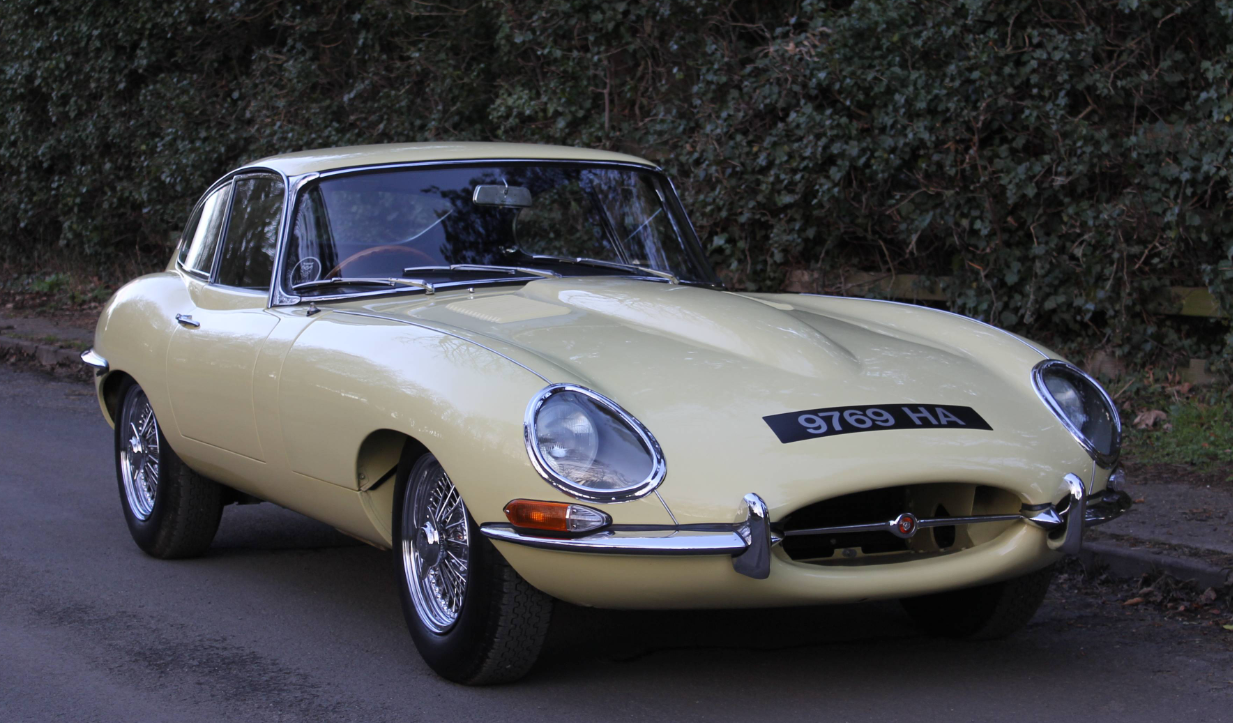
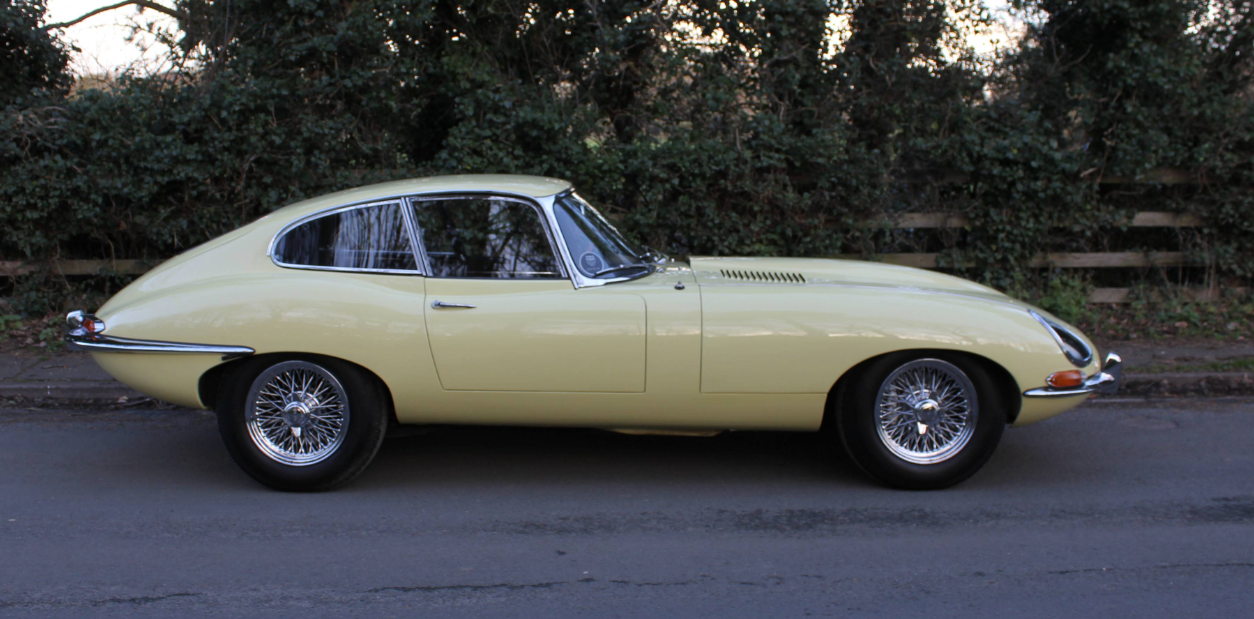
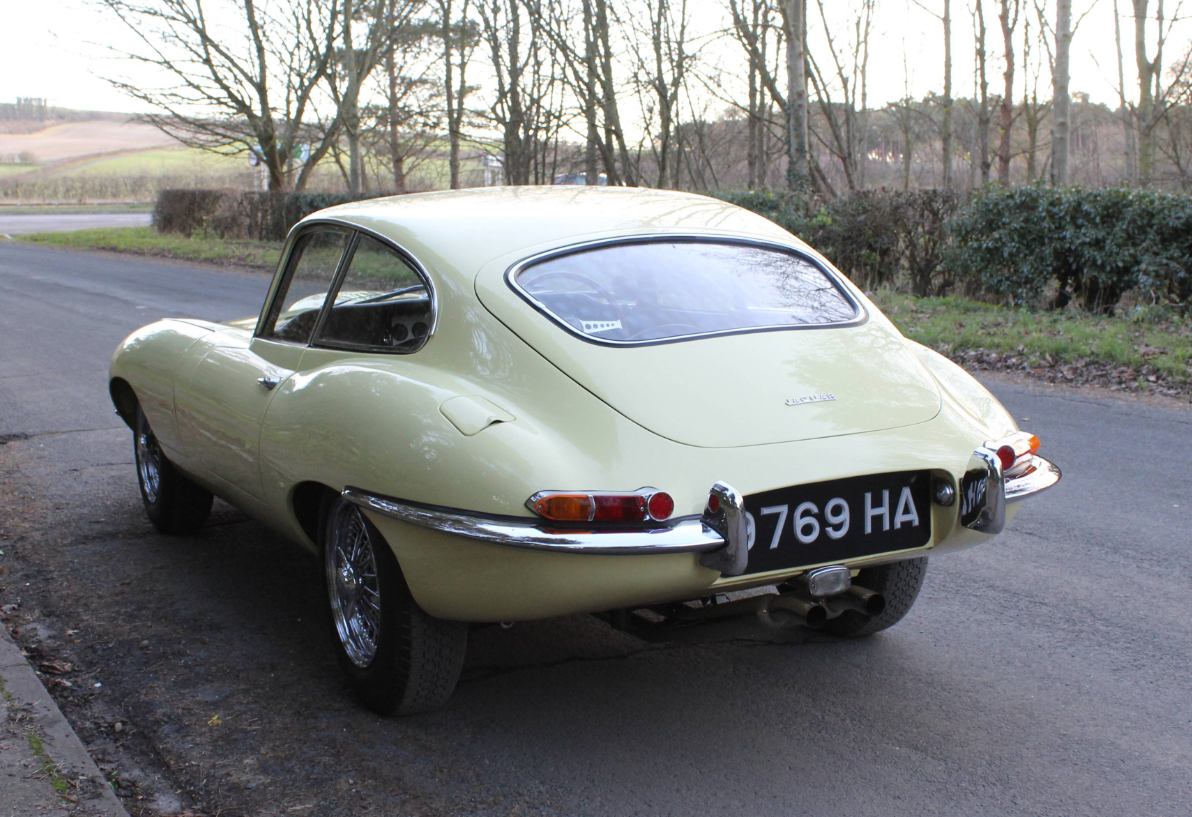
9769 HA: a 1963 Series 1 3.8 fixed-head coupe
This is the archive author's own car, a home-market right-hand-drive coupe in Primrose with black leather. Its history is unusually well documented, and this page records it as it is: what left the factory, what was replaced in restoration, and what has been changed since.
Factory record
The car was manufactured on 6 June 1963. It was distributed by Sanderson and Holmes Ltd of Derby and supplied new by Highfield Motors of Derby to a first owner in Sutton Coldfield. The original buff logbook survives, together with the data plate the car carried before its restoration, and a Jaguar Daimler Heritage Trust certificate confirming the factory details.
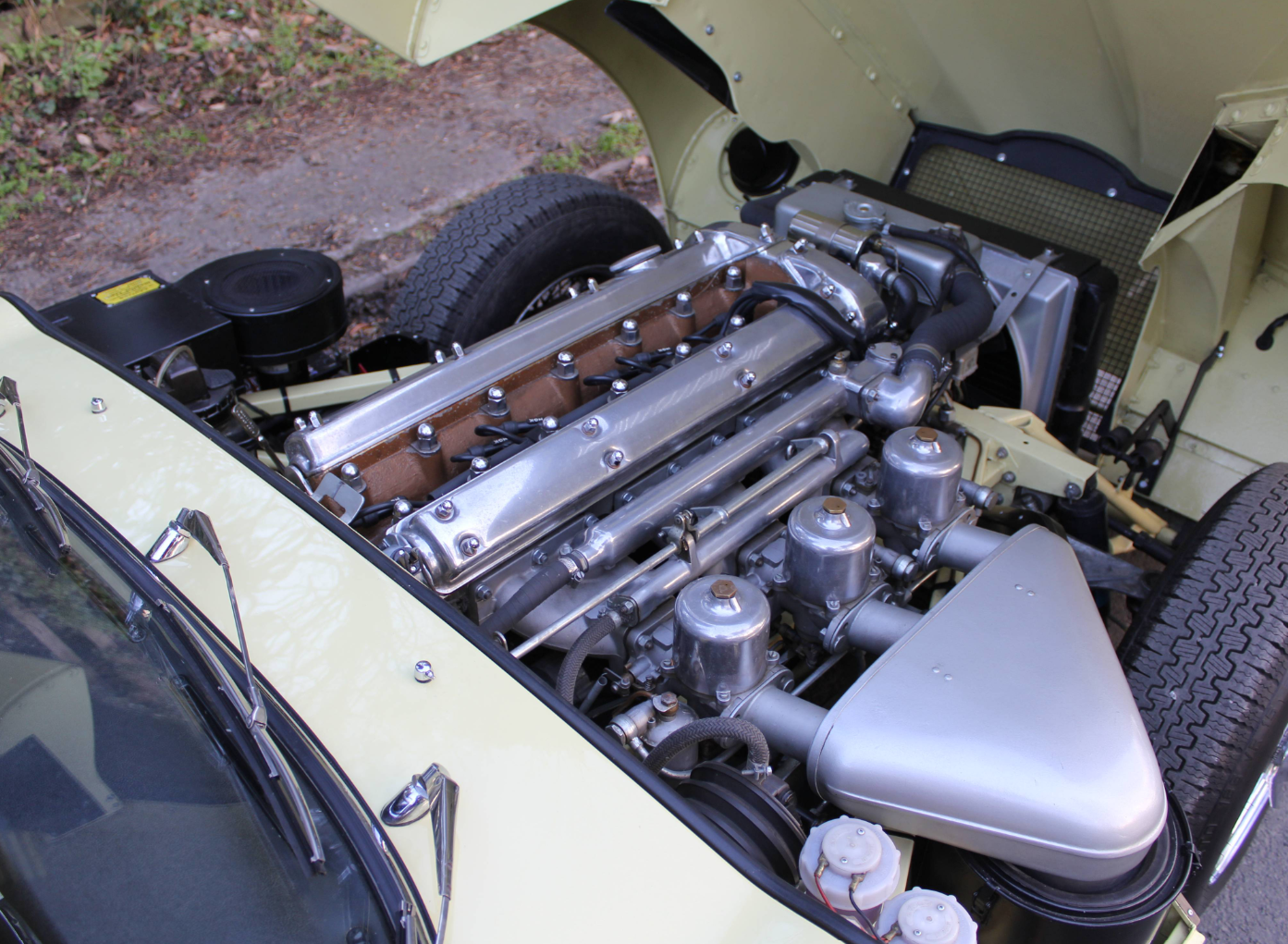
By factory specification it is a Series 1 with the 3.8-litre XK engine, triple SU carburettors and the Moss gearbox, as described on the Series 1 page. Previous owners are not named on this page; the documentation that identifies them remains with the car, and a public archive is not the place for it.
1973 to 2000: one long ownership
In 1973 the car passed to an owner who used it until 1987, when it was parked in his garage. It stayed there, untouched, for thirteen years. In 2000, after twenty-seven years with that one owner, it was sold in need of restoration. It still ran and drove with a battery and some basic attention, and it was trailered away to be stripped to a bare shell.
That sequence is common among surviving E-Types and it is usually the kinder outcome. A car laid up complete is a better restoration starting point than one dismantled by several hands, because the original assembly is still there to be measured and photographed before it comes apart.
The restoration, completed 2009
The bonnet, doors, tailgate, engine, gearbox, rear axle, interior, trim, glass and front frames were removed and the shell was sand blasted, then mounted on a rotisserie for the bodywork. New Martin Robey panels went in: door skins, front wing panels, inner and outer sills, boot floor, footwells and the rear panel, lead loaded as the factory had done. These are the areas covered on the rust and bodywork page, and this car is a fair example of how far the corrosion usually goes before a car is stopped and dealt with.
The underside was protected with Gravitex stone chip coating and the shell and panels were painted by a classic car painter. Reassembly used renewed brightwork, new runners and trims, and zinc-plated UNF fasteners throughout.
The engine was stripped and rebuilt with new pistons and connecting rods, new main and big end bearings, a reground crankshaft, a cylinder head rebuilt for unleaded fuel and a balanced flywheel. The triple carburettors were rebuilt, and the original Moss gearbox was rebuilt at the same time. A six-branch manifold and a stainless steel exhaust system from Classicfabs were fitted. The cooling system was renewed with an improved radiator core and a Cool Cat fan, a subject covered in the cooling system article.
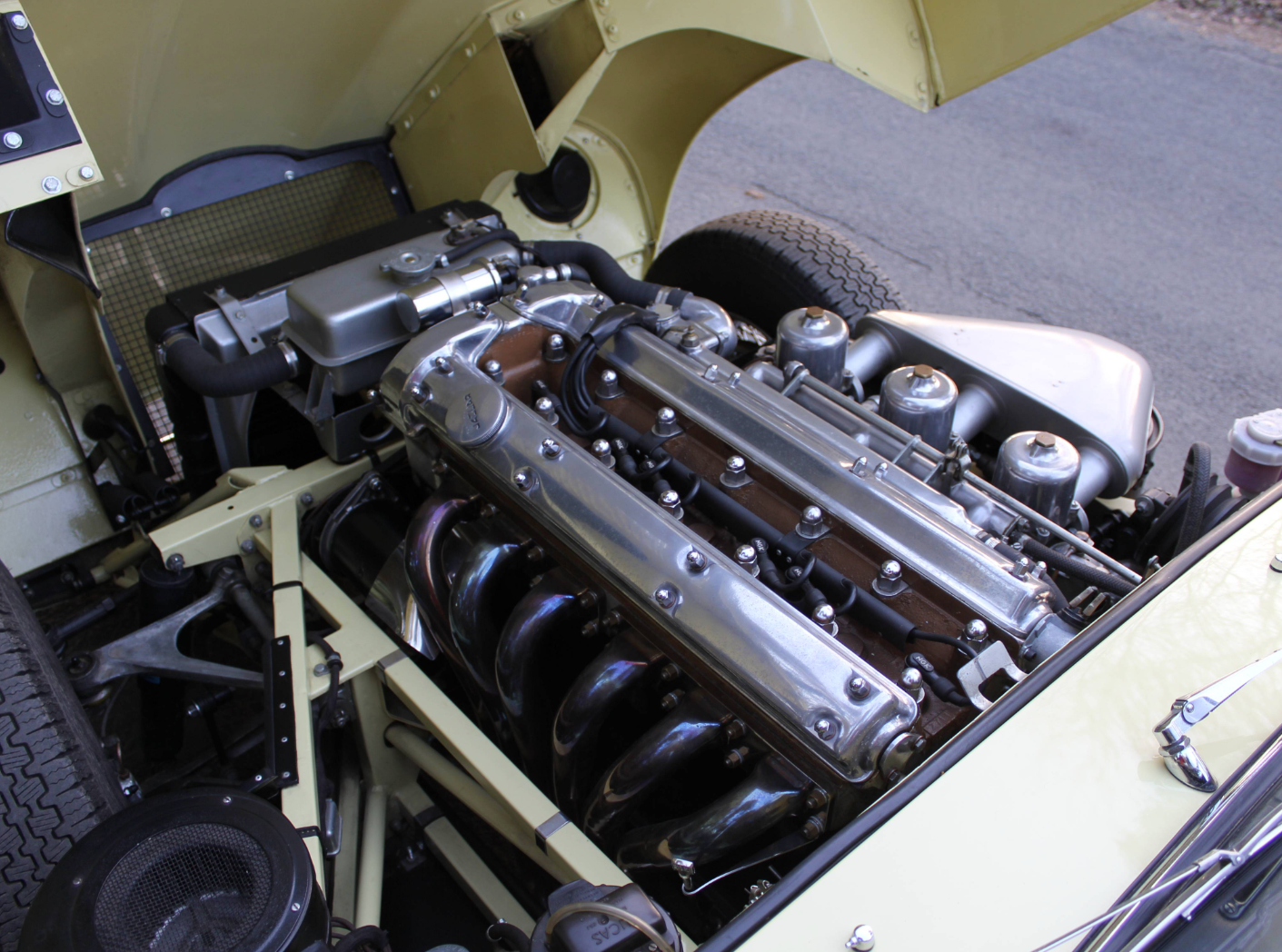
The rear axle was blasted, painted and rebuilt with new bearings and seals. The suspension was blasted and zinc plated, an adjustable front suspension reaction plate from Bob Beere Racing was fitted, and the dampers were renewed all round. The steering rack was reconditioned with new ball joints.
The electrics were renewed in full: a new loom, electronic ignition in place of the original Lucas contact-breaker distributor, a reconditioned dynamo, a high-torque starter, new lights throughout, and conversion from positive to negative earth. The ignition change is discussed in the ignition article. The brakes were rebuilt with new discs, calipers and hoses, and later uprated to Zeus twin-pot calipers with vented discs.
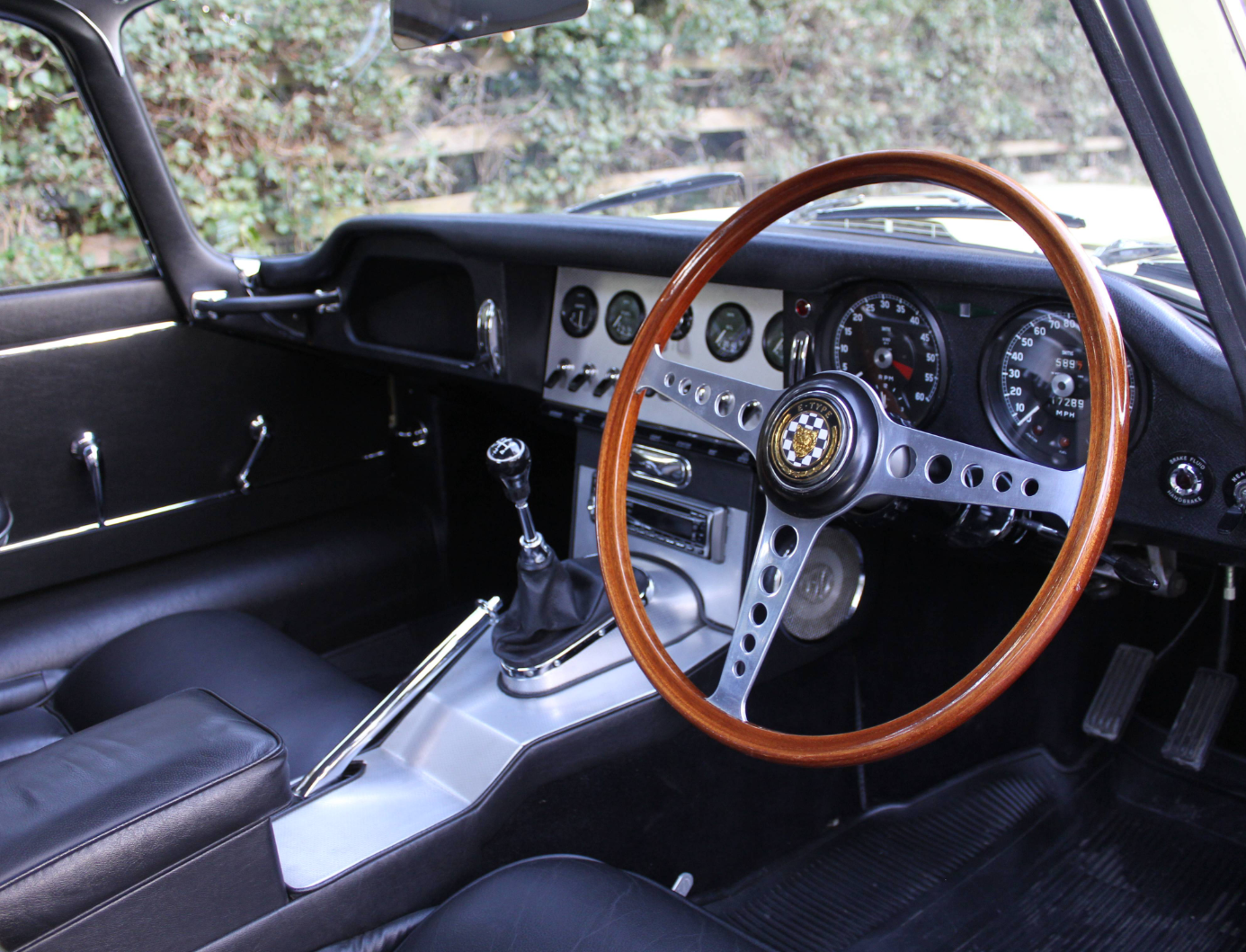
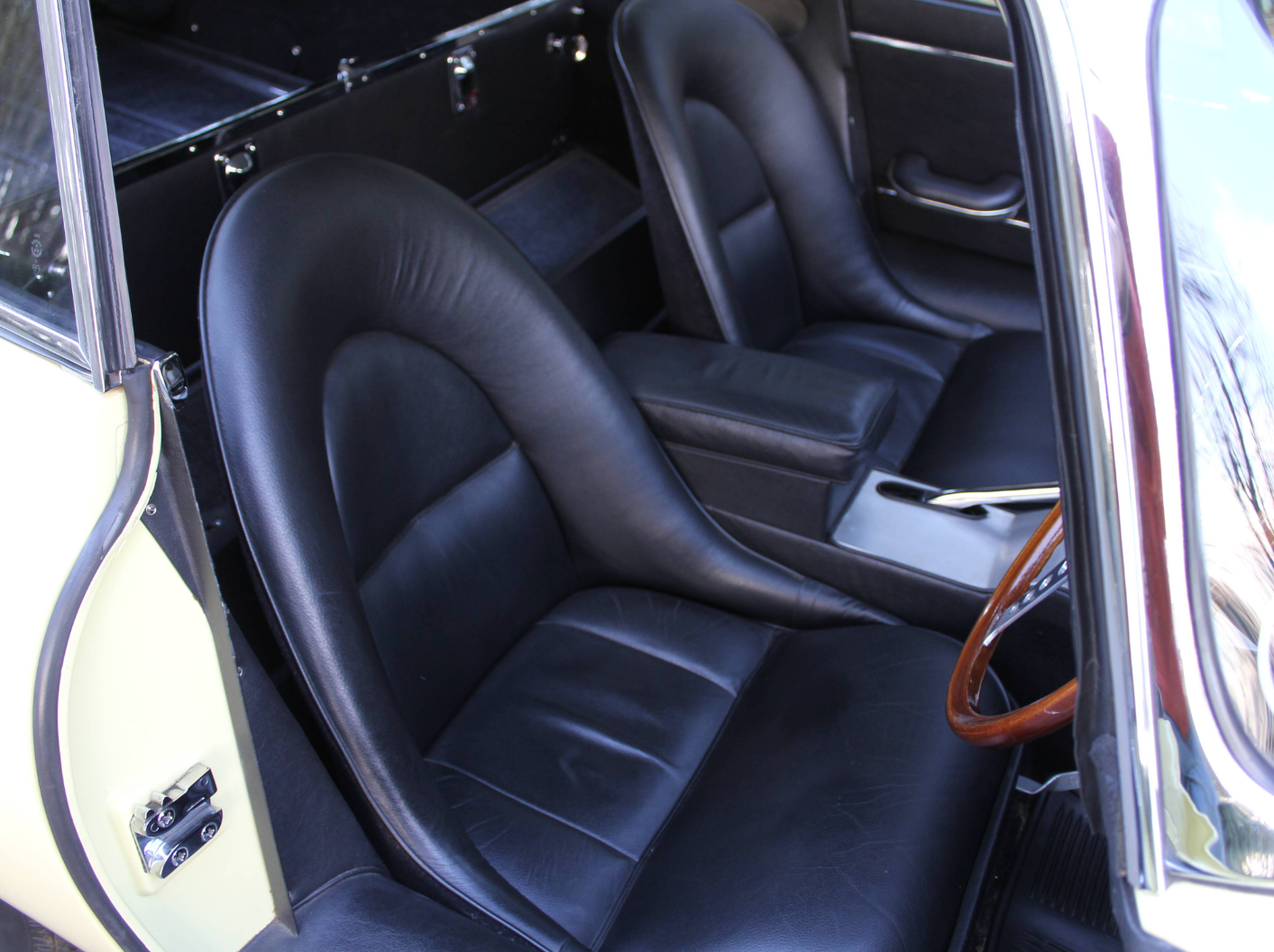
Inside, the seat frames were blasted and painted, the seats, door cards and panels were retrimmed, the headlining was replaced and a new aluminium dash panel was made. The car runs on new six-inch chrome wire wheels with Pirelli tyres. A restoration record, photographs and a file of invoices accompany the car.
Since the rebuild
The car was back on the road by 2009 and has covered around 9,000 miles since, including touring in the United Kingdom with the Jaguar club. A later Series 1 4.2 all-synchromesh gearbox was fitted for easier driving, a conversion described in the Moss-to-4.2 gearbox article. The original Moss box is retained with the car. The same work included a new clutch, a silicone hose set, a stainless clutch hose and a new rev counter generator. The present owner bought the car earlier this year, since when it has had a thorough service and a new battery.
Matching numbers, and what has changed
The car is described as matching numbers, and it now runs a later gearbox with the original retained. Both statements are true, and they belong in the same sentence. The engine, cylinder head and body carry the numbers the factory records show, which is what the chassis and engine numbers page and the identification section explain how to check. The gearbox fitted is a later unit, while the numbered original remains with the car.
The full list of departures from factory specification, recorded here because an archive page is exactly where such a list belongs, is: the electronic ignition, the negative earth conversion, the Zeus twin-pot calipers with vented discs, the Cool Cat fan, the uprated radiator core, the adjustable reaction plate, the six-inch wheels and the gearbox. The buying and evaluation page discusses what matching numbers does and does not mean; this car is the worked example. What makes changes like these defensible is reversibility: nothing done to the car has cut or altered its structure, and the removed original gearbox has been kept rather than sold on.