
The Car
The Series 1 2+2
By Stephen Ruddick, Sept 2026
Jaguar's answer to owners who wanted an E-Type and also had a family. It was the most expensive E-Type you could buy in 1966, and it is the least expensive you can buy today. This page is built on notes supplied by Stephen Ruddick, the owner of TUK 129F.
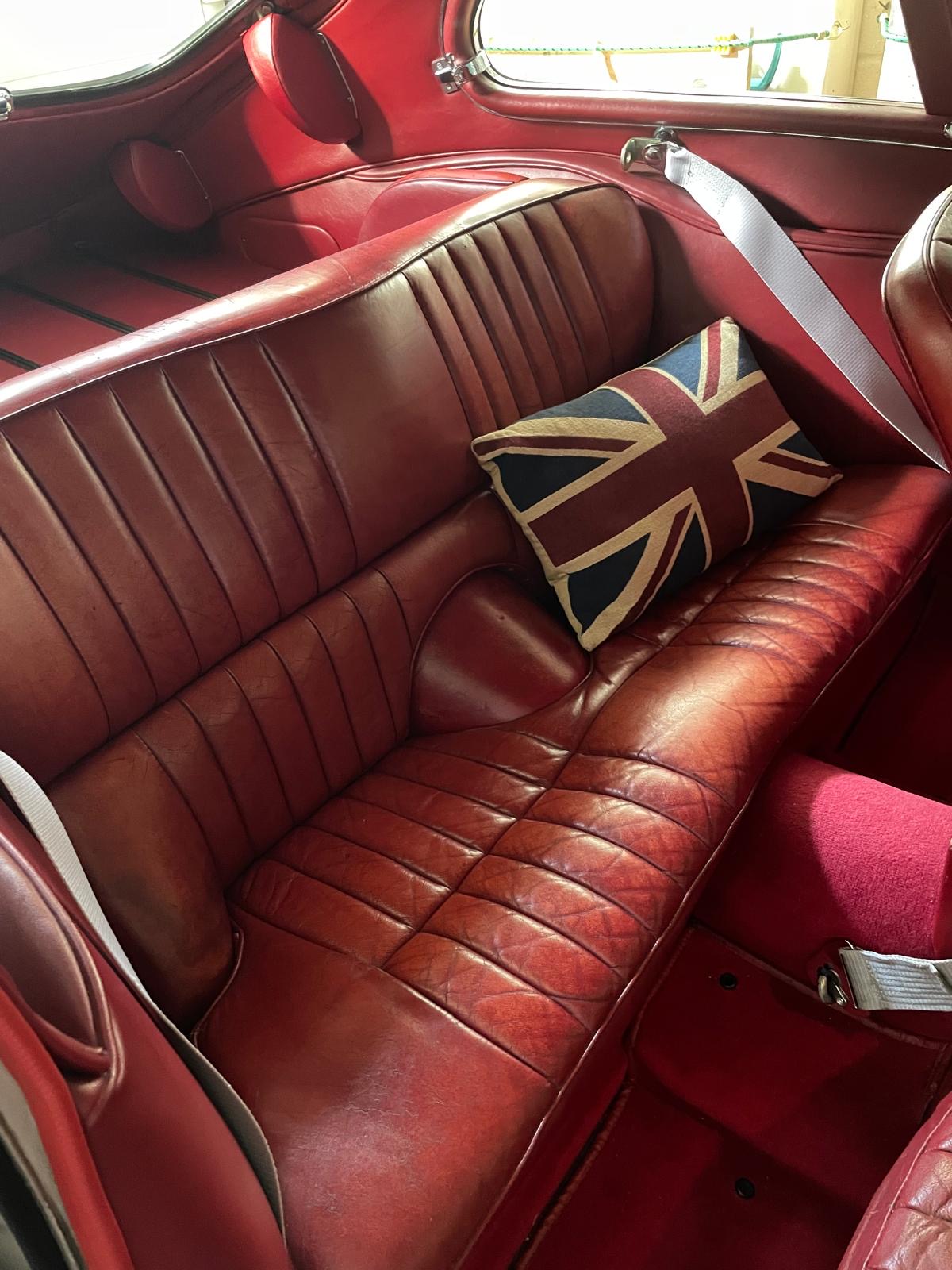
The 2+2 arrived in 1966 as an attempt to broaden the appeal of a car that had been designed without any thought of carrying more than two people. Jaguar added two fully upholstered rear seats, suitable for small children or, for a shorter journey, perhaps one adult.
It is a body style rather than a series, and mechanically it is the same car. What this archive says about rust, engines and running gear applies to it unchanged.
What Jaguar changed
Four changes did the work.
- The wheelbase and the overall length grew by 9in (23cm)
- The doors grew in length by 8.5in (22cm)
- The roof was raised by 2in (5cm)
- The footwells were extended rearward to create a dropped floor
This archive's specifications page records the resulting 2+2 wheelbase as 105in (2,667mm) against 96in (2,438mm) for the two seat cars, and the overall length as 184.5in (4,686mm). The nine inch increase in wheelbase is therefore confirmed by a second source.
The extra length is all in the monocoque floorpan behind the front bulkhead. The tubular front frame that carries the engine and the front suspension is common to every E-Type and is not lengthened.
A handful of smaller refinements came with the change: small storage trays under the dash, a lidded lockable glovebox, and individual air direction controls for driver and passenger.
The rear seats, and what they are really for
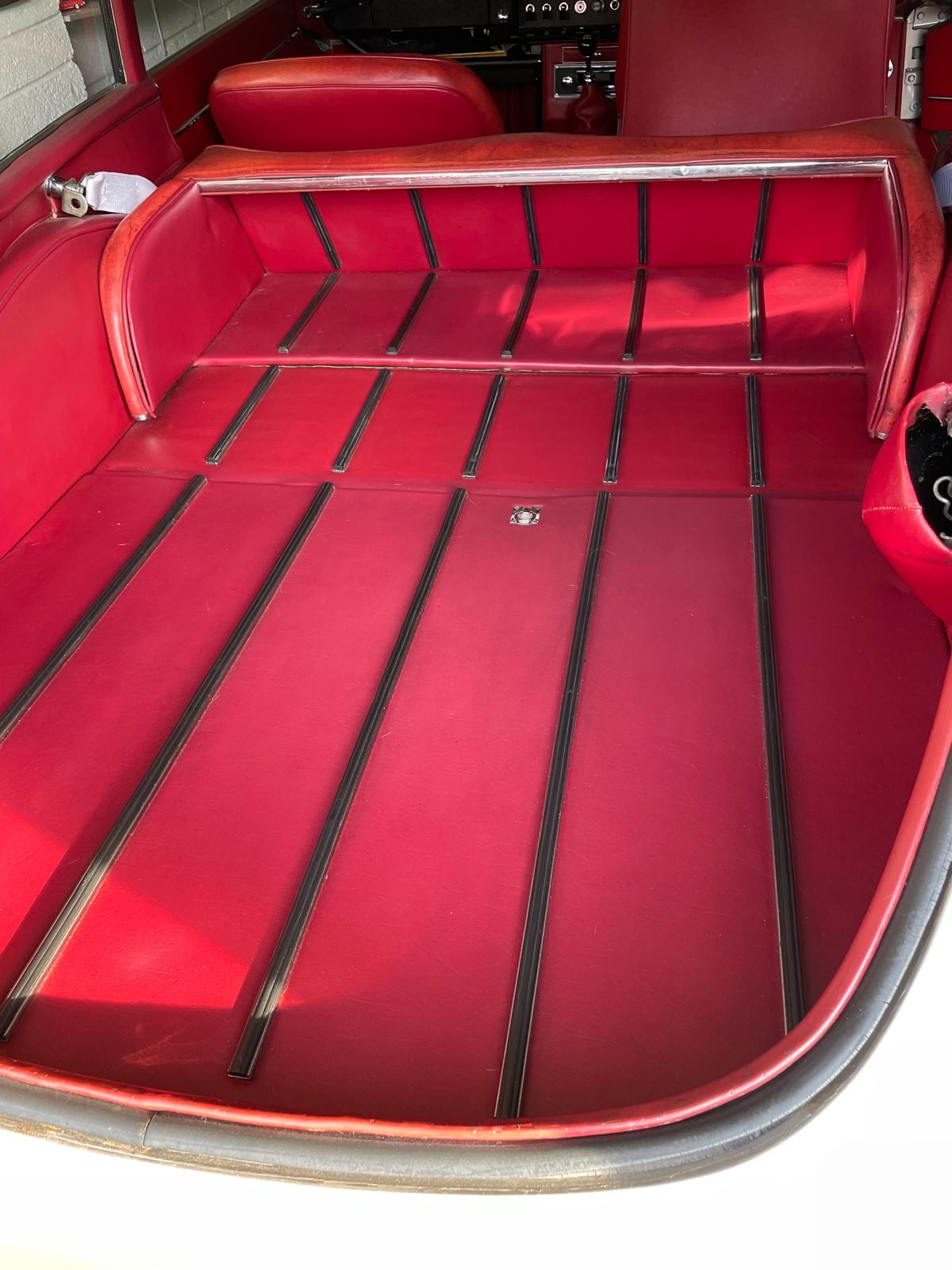
The rear seats are occasional seats and nobody has ever pretended otherwise. The more useful feature is what happens when you do not need them. The upper part of the backrest moves forward on a cantilever arrangement, extending the existing platform by approximately 12in (30cm). That gives a genuinely useful space for luggage, or for quite large dogs.
The first automatic E-Type
The extra length is what made it possible. The 2+2 was the first E-Type offered with automatic transmission, a Borg-Warner unit. It sold well in the United States, where it mattered, and was rarely chosen in the United Kingdom. The exact Borg-Warner model fitted to the six cylinder 2+2 is not established by this archive.
What it cost
When it was launched in March 1966 the 2+2 was the most expensive E-Type in the range.
| Model | Price when new, including Purchase Tax | Equivalent in 2026 |
|---|---|---|
| 2+2 | £2,284 | £55,230 |
| Fixed head coupe | £2,068 | £50,007 |
The 2026 equivalents are Stephen Ruddick's calculation. This archive has not independently recalculated them, though the two figures are consistent with one another.
That £216 difference in 1966 is the whole irony of the car. The 2+2 was the dearest E-Type you could buy, and today it is the cheapest.
How many were built
Stephen Ruddick gives the following for Series 1 and Series 1.5 cars between 1966 and 1968, with his own note that the figures are approximate and that various sources differ.
- United Kingdom: 1,205 cars
- United States: 3,409 cars
This archive's production numbers page gives 3,616 Series 1 4.2 2+2s and 1,983 Series 1.5 2+2s, a total of 5,599. The two sets of figures are not directly comparable, because the first covers two markets and the second covers all of them. This archive has not reconciled them and does not claim they agree.
2+2 production figures are among the hardest E-Type numbers to pin down, because some sources treat the 2+2 as a body style and some treat it as a model in its own right.
Buying one today
Stephen Ruddick's own summary, set out as he wrote it.
| For | Against |
|---|---|
| It is the least expensive model, even though it was the most expensive when new | It is heavier than the two seat coupe, and therefore slightly slower |
| It is easier to live with, the practical E-Type, and especially so for taller people | It is not as elegant as the pure shape of the fixed head coupe |
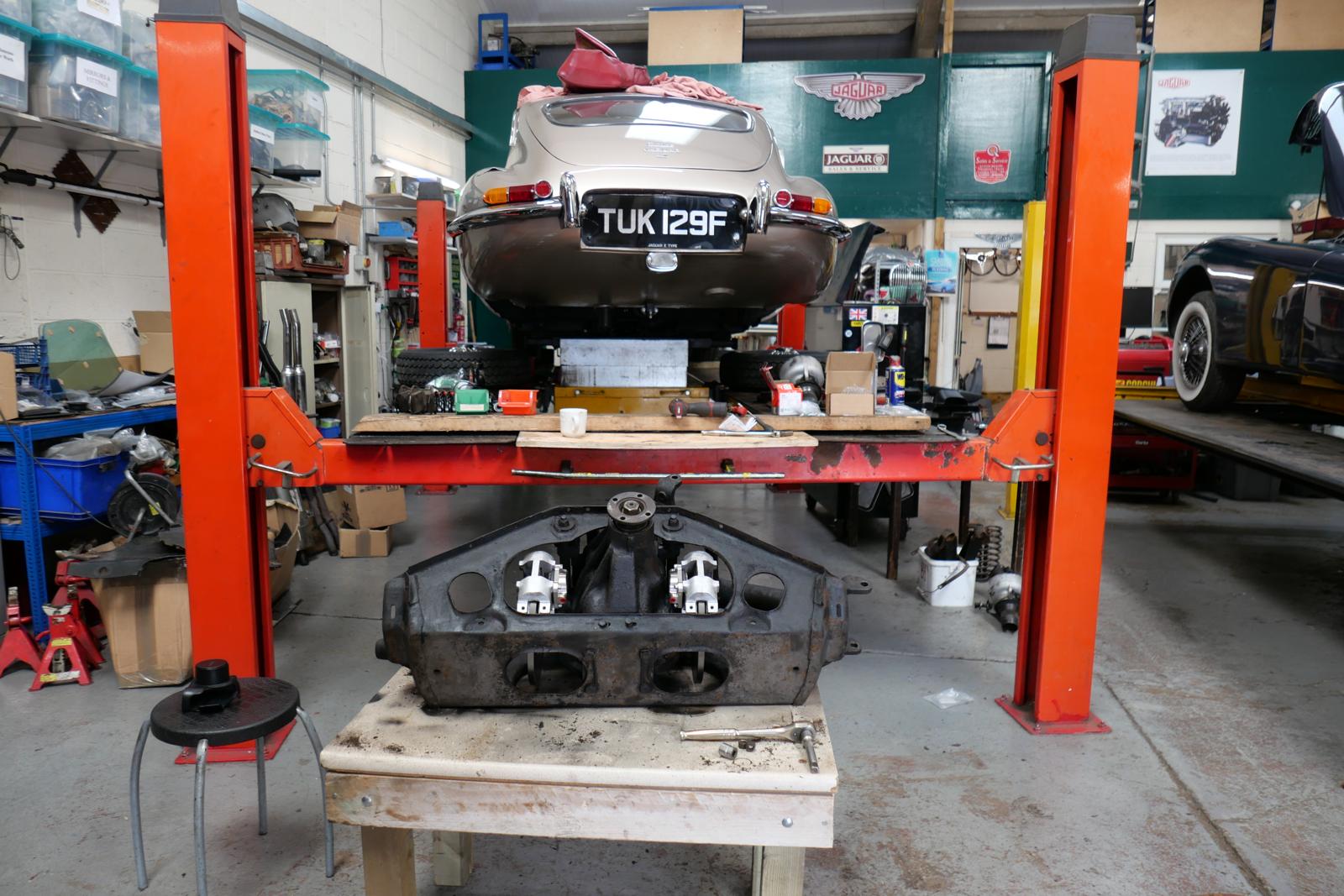
| Access is much easier, thanks to the longer doors and the higher roofline | Servicing the rear suspension is harder because of the longer floor, though remote bleed nipples help |
What this page cannot establish
- The weight difference between the two seat coupe and the 2+2. Two accounts disagree by roughly a factor of two.
- Whether the 2+2's public launch and its entry into the chassis sequence are the same event. Stephen Ruddick gives a launch of March 1966. This archive's Series 1 page records the 2+2 entering the 4.2 chassis sequence in September 1965 for right hand drive cars and October 1965 for left hand drive. Both can be true, but the archive has not confirmed that each describes what it appears to describe.
- Whether the United Kingdom and United States totals reconcile with the per series totals published elsewhere on this archive.
- The Borg-Warner model number fitted to the six cylinder 2+2.
Common questions
What is the difference between an E-Type 2+2 and a fixed head coupe?
The 2+2 sits on a floorpan nine inches longer, with a roof raised by two inches, doors longer by eight and a half inches, and footwells extended rearward to create a dropped floor. It has two occasional rear seats where the coupe has a luggage platform. Mechanically it is the same car.
Was the 2+2 the first automatic E-Type?
Yes. The extra length is what made it possible, and automatic transmission was offered on the 2+2 before any other E-Type. It sold well in the United States and was rarely chosen in the United Kingdom.
How much did an E-Type 2+2 cost when new?
At its launch in March 1966 the 2+2 was the most expensive E-Type at £2,284 including Purchase Tax, against £2,068 for a fixed head coupe. Those figures and their modern equivalents were supplied to this archive by Stephen Ruddick.
Is the 2+2 much heavier than the two seat coupe?
It is heavier, but by how much is not settled. This archive's specifications page gives 2,481lb against 2,778lb as manufacturer's unladen weights, a difference of 297lb, and 2,900lb against 3,090lb as kerb weights, a difference of 190lb. A contributor to this page puts the difference at four to five hundredweight, which is considerably more. The archive has not reconciled the two.
How many Series 1 2+2s were built?
This archive's production page gives 3,616 Series 1 4.2 2+2s and 1,983 Series 1.5 2+2s. A contributor gives 1,205 cars for the United Kingdom and 3,409 for the United States across the same period, with his own note that the figures are approximate and sources differ. The two sets count different things and have not been reconciled.
Sources
- Notes, figures and photographs supplied to this archive by Stephen Ruddick, owner of TUK 129F, in September 2026. Unlike most of this archive, the substance of this page is a contributor's account rather than a published source, and it is set out here as he gave it.
- This archive's own specifications page, for the 2+2 wheelbase and overall length and for the three weight bases.
- This archive's own production numbers page, for the per series 2+2 totals.
Last reviewed .